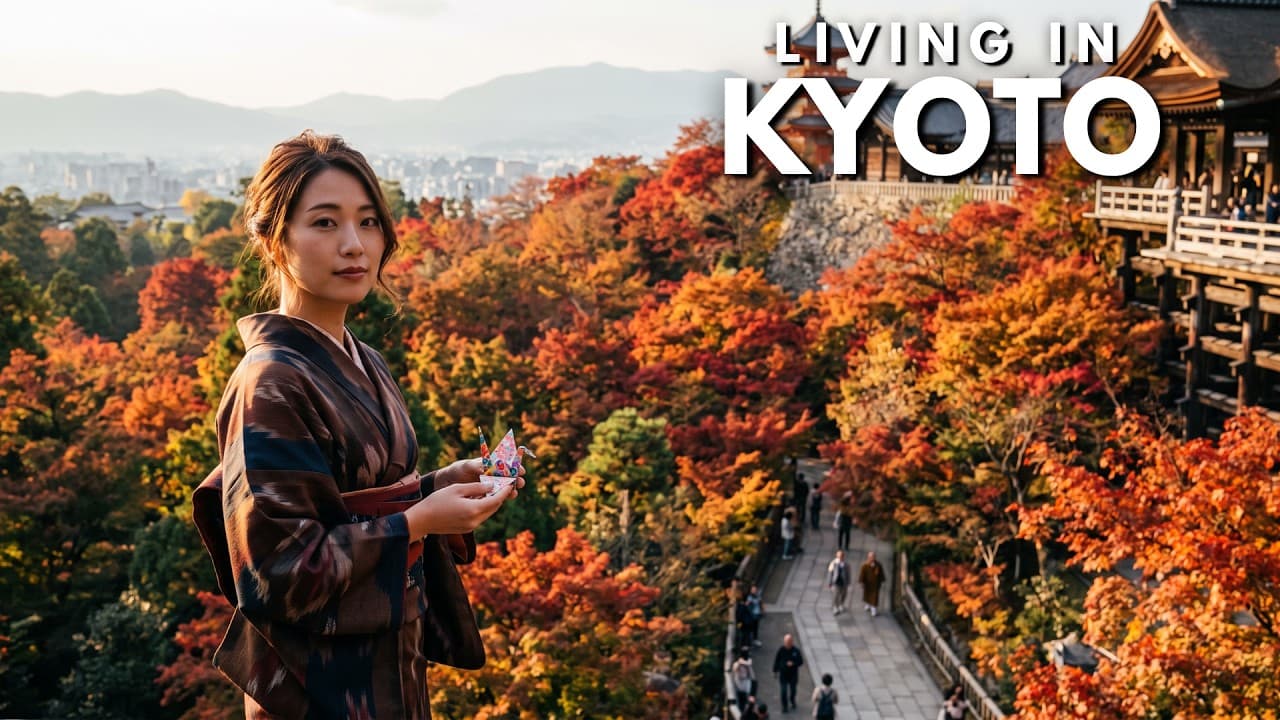
Kyoto in autumn is the image most people carry of Japan before they ever land: a vermilion bridge under a canopy of maples, a wooden temple stage floating above a valley of red and gold, a maiko in silk disappearing down a lantern-lit alley. For roughly three weeks every November, the old capital delivers that picture almost exactly. What the postcards leave out is everything around the frame: the queue at Kiyomizu-dera that starts before the gates open, the city bus so full it skips your stop, and the signs in Gion asking visitors, politely but firmly, to keep out of private lanes.
This guide takes the Happy Living film on Kyoto in its most beautiful season and fills in what a visitor needs to know: when the leaves really peak, which temples are worth the crowds, how the geisha districts work, and why the best hour of the day is the one most tourists sleep through.
Watch the Film First
The film follows the autumn as it moves through the city, from the first colour in the hills of Arashiyama to the last leaves falling into the pond at Eikan-do. It spends time with the quiet routines that make Kyoto work, from the early-morning temple sweepers to the residents of Gion who live beside one of the most photographed streets in Asia. It also shows the side the tourism boards do not: the shoulder-to-shoulder bamboo grove at midday, the crowd control at Tofuku-ji, and the strain on a city of about 1.4 million that hosts tens of millions of visitors a year. The question it keeps returning to is whether a place can stay this beautiful while being this loved.
Momiji, Mono no Aware and Why Kyoto Does Autumn Differently
Kyoto was the capital of Japan for more than a thousand years, from 794 until the emperor moved to Tokyo in 1868, and the city still carries itself like a capital. More than 1,600 Buddhist temples and roughly 400 Shinto shrines survive here, many with gardens laid out by people who thought about how a particular maple would look across a particular pond in a particular week of November. That is the first thing to understand about autumn in Kyoto: the colour is not an accident of nature. It was planted, pruned and framed on purpose, often centuries ago.
The Japanese word for autumn leaves is koyo, and the maple specifically is momiji. Going out to see them is momijigari, literally "maple hunting," a pastime Kyoto aristocrats were writing poems about in the Heian period. Behind it sits an older idea, mono no aware, usually translated as a gentle sadness at the passing of things. Cherry blossom gets most of the credit for this feeling abroad, but residents will tell you autumn is the deeper version. The maples turn slowly, hold for a week or two, and then let go all at once in the first cold rain. Watching that happen in a temple garden is the point. Photographing it is secondary.
The temples each have their own character in this season. Tofuku-ji's Tsutenkyo bridge looks down over a valley of roughly 2,000 maples, and photography on the bridge has been banned during peak weeks since 2016 to keep the crowd moving. Eikan-do, formally Zenrin-ji, is known as "Eikan-do of the maples," and its pond garden and night illumination are probably the best in the city. Kiyomizu-dera's wooden stage, built without a single nail, is lit up in late November and is the most crowded place in Kyoto when it is. Kodai-ji, founded in 1606 by the widow of the warlord Toyotomi Hideyoshi, runs a quieter illumination with a bamboo grove of its own. Kinkaku-ji, the Golden Pavilion, is more gold leaf than red leaf, but its pond reflection framed by autumn colour is worth one early visit. Then there is Arashiyama on the western edge of the city, where the Togetsukyo bridge, the Tenryu-ji garden and the Sagano bamboo grove sit a short walk apart and the hillside colour arrives a few days before the city centre.
Gion, Geiko and the Truth About the Crowds
The film spends a long time in Gion, and so should you, with one caveat. Kyoto has five geisha districts, called hanamachi: Gion Kobu, Gion Higashi, Pontocho, Miyagawa-cho and Kamishichiken. The women who work in them are called geiko in the Kyoto dialect, and their apprentices are maiko, recognisable by the trailing obi, ornate hair ornaments and painted lower lip. Trained for years in dance, music and conversation, they work through a closed system of ochaya teahouses, most of which still follow the rule of ichigen-san okotowari, no first-time customers without an introduction. That is why a casual visitor cannot simply book an evening. What you can do is attend a public performance at Gion Corner, visit during the spring and autumn dances, or arrange a dinner through a hotel or licensed agency, which is expensive but legitimate.
What you should not do is chase them. Hanamikoji street, the main avenue through Gion Kobu with its wooden machiya facades, became so overrun with visitors blocking geiko on their way to appointments that in April 2024 the residents' council closed the private side alleys to tourists and put up signs warning of a fine of about 10,000 yen. The main street remains open. The city has run tourist etiquette campaigns for years, including the "Akimahen" posters that use the Kyoto word for "don't" to list the basics: no touching kimono, no photographing geiko without consent, no eating while walking in Nishiki Market. None of this is hostility. It is a neighbourhood trying to stay a neighbourhood.
The crowds are the real truth of Kyoto in autumn, and they have changed how the city works. The one-day bus pass tourists used for decades was discontinued because the routes to the eastern temples were so full that residents could not get home. The city has since added tourist express buses to the Higashiyama temples and sharply raised its accommodation tax in 2026. Here is the secret the film makes clear and most guides underplay: almost all of it vanishes before 8 am. Fushimi Inari, the shrine with thousands of orange torii gates, never closes, and at dawn you can walk the lower tunnels nearly alone. Temples generally open between 8 and 9, and the first hour inside any of them is quiet. Early mornings are the whole strategy, and the same rule holds in the Smoky Mountains in autumn, where the trails belong to whoever beats the tour buses.
What It's Really Like to Visit
Kyoto is easy to reach, easy to walk and genuinely overwhelming in the third week of November. Plan around that and it becomes one of the great trips.
- Best time to go: Peak colour in the city is usually from about November 15 to 30, with Arashiyama and Ohara turning a little earlier and sheltered temple gardens holding into early December. Night illuminations at Eikan-do, Kiyomizu-dera and Kodai-ji run roughly from early November to early December.
- Getting there: The Shinkansen from Tokyo takes about 2 hours 15 minutes on a Nozomi service and costs roughly 14,000 yen one way. From Kansai International Airport, the JR Haruka express reaches Kyoto Station in about 75 minutes.
- Where to base: Higashiyama or Gion to walk to the eastern temples at dawn, Downtown around Shijo and Karasuma for restaurants and the subway, and the Kyoto Station area for cheaper rooms and quick day trips. Sleep in Arashiyama to have the bamboo grove to yourself.
- Costs: Kyoto is cheaper than you may fear. A good bowl of ramen is under 1,500 yen, temple entry is typically 400 to 1,000 yen, and a tidy business hotel runs around 12,000 to 20,000 yen a night outside the peak weeks, when rooms tighten sharply, so book months ahead. A kaiseki dinner in Gion can run 20,000 to 40,000 yen per person.
- Etiquette: Shoes come off at temple halls, so wear ones you can remove quickly. Keep your voice down on buses and trains and never take phone calls on them. Never photograph a geiko or maiko without asking, and never touch them or block their path. Bins are rare, so carry your rubbish, and eat Nishiki Market snacks at the stall rather than walking.
- Beating the crowds: Start at 6 am with Fushimi Inari or the bamboo grove, be at a big temple when the gates open, and save the smaller gardens of Ohara or Takao for the busy afternoons. Weekdays beat weekends, and the last hour of an illumination is usually quieter than the first.
- Weather: November is one of the best months in Japan, with daytime highs roughly 15 to 17 degrees Celsius, evenings around 7 degrees and mostly dry skies. Bring a warm layer for illuminations and a compact umbrella.
- Food to seek out: Yudofu, tofu simmered in kombu broth near Nanzen-ji and in Arashiyama, is the taste of a Kyoto autumn. Add matcha from nearby Uji, pickles and fresh yuba from Nishiki Market, and one kaiseki meal, the seasonal multi-course cuisine Kyoto invented, if the budget allows.
- Day trips: Nara is about 45 minutes by Kintetsu express for the Great Buddha of Todai-ji and the deer of Nara Park. Uji is about 20 minutes on the JR Nara line for Byodo-in, the temple on the 10 yen coin, and the best matcha in the country.
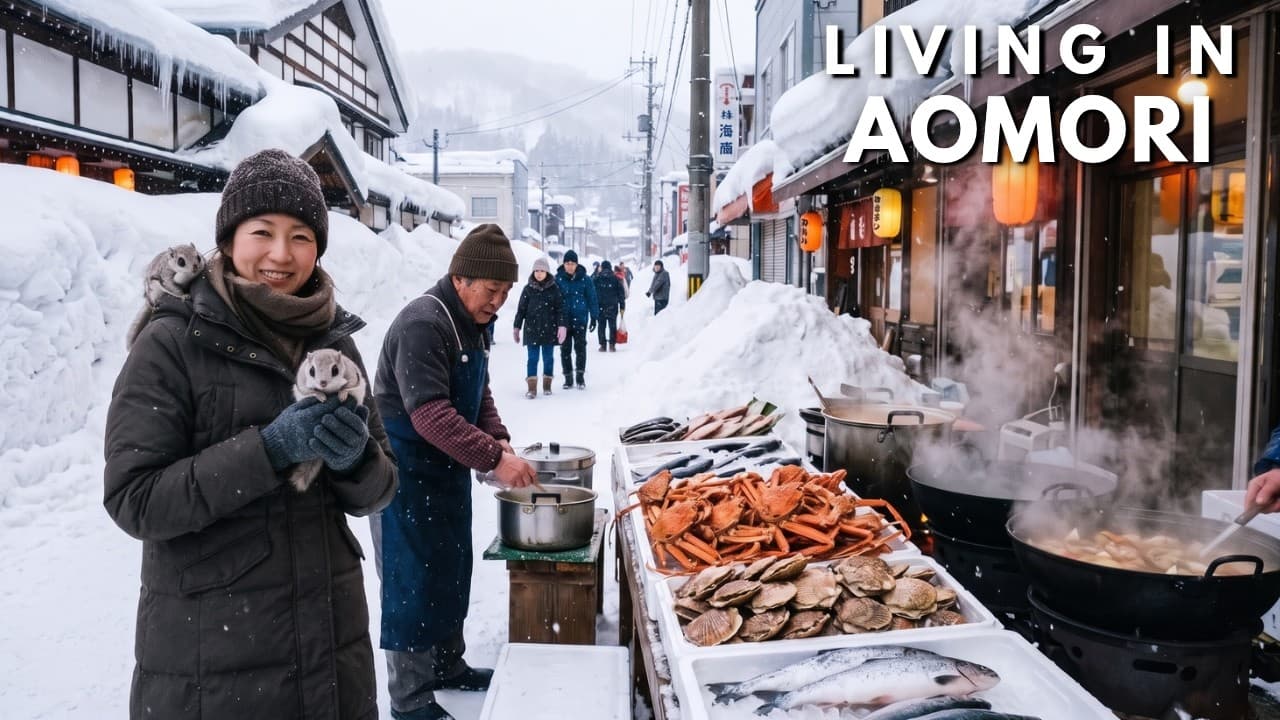
For the opposite extreme, our guide to Aomori, the snowiest city on Earth, shows the same country a few weeks later, buried under metres of snow while Kyoto is still sweeping up leaves.
What to Pack for Kyoto in Autumn
Most days run from a dawn shrine to a temple illumination after dark, so pack for long hours on your feet and a swing of about ten degrees between morning and evening.
Affiliate picks, not a shopping checklist. Use what you own first. Check the listing's model, size, seller and current availability before purchasing.
Lonely Planet Japan Travel Guide
The standard reference for a first or fifth trip to Japan, with reliable Kyoto temple maps and rail advice. Check for the latest edition.
Japanese Phrasebook
A pocket phrasebook earns real goodwill in Kyoto, where a polite sumimasen and arigatou gozaimasu open doors that English alone does not.

Lowepro Flipside Trek Camera Backpack
Kyoto in autumn is a dream for photographers, so protect your camera gear. This pack carries a body, lenses and a tripod through long temple days.

Merrell Moab 2 Hiking Boots
Temple-hopping in Kyoto means miles of walking on ancient stone paths and steep approaches. Grippy and supportive on wet steps; pick the low-cut version if you expect to remove them at many temple halls.
FAQ
When exactly is the best week for autumn leaves in Kyoto?
In most years the city centre peaks between about November 15 and 30, with the third week of November the safest bet. Arashiyama and Ohara often colour a few days earlier, while sheltered gardens like Eikan-do and Tofuku-ji can hold into early December. Check the Japanese koyo forecasts in late October before booking illumination tickets.
Can I see a geisha in Kyoto without a private booking?
Yes, but respectfully. Gion Corner stages nightly performances that include a maiko dance, and the public dance seasons, such as the Miyako Odori in spring and Gion Odori in autumn, sell tickets to anyone. If you spot a geiko on Hanamikoji in the early evening, take it as luck, keep your distance and do not photograph her without permission.
How many days do I need in Kyoto in autumn?
Three full days is the realistic minimum to cover the eastern temples, Arashiyama and Fushimi Inari without rushing, and four or five lets you add Nara or Uji and a slower morning or two.
Is Kyoto worth visiting in autumn despite the crowds?
Yes, with a plan. The crowds concentrate in a handful of places between 10 am and 4 pm and at the biggest illuminations after dark. Move early, lean on weekdays and spread your time across smaller temples, and Kyoto in November remains one of the most beautiful trips a traveller can make. If you would rather trade colour for near-total solitude, the fjord autumn in our Norway travel guide peaks in late September.
Watch More from Happy Living
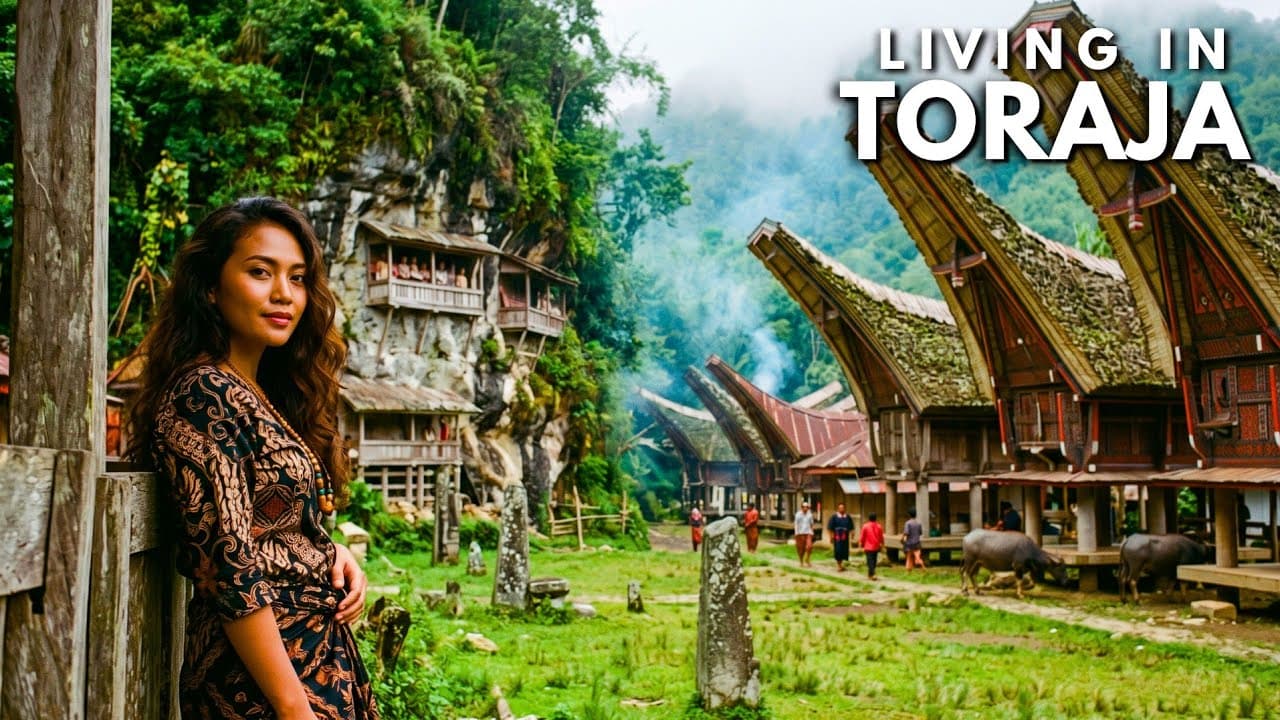
Kyoto in autumn is one stop on a longer journey through how people actually live in the places the world thinks it knows. Browse the full Happy Living film collection for Aomori under metres of snow and the Toraja highlands where families live alongside their dead, or subscribe on YouTube to catch each new film the week it is released. The journal has a companion guide for every destination.