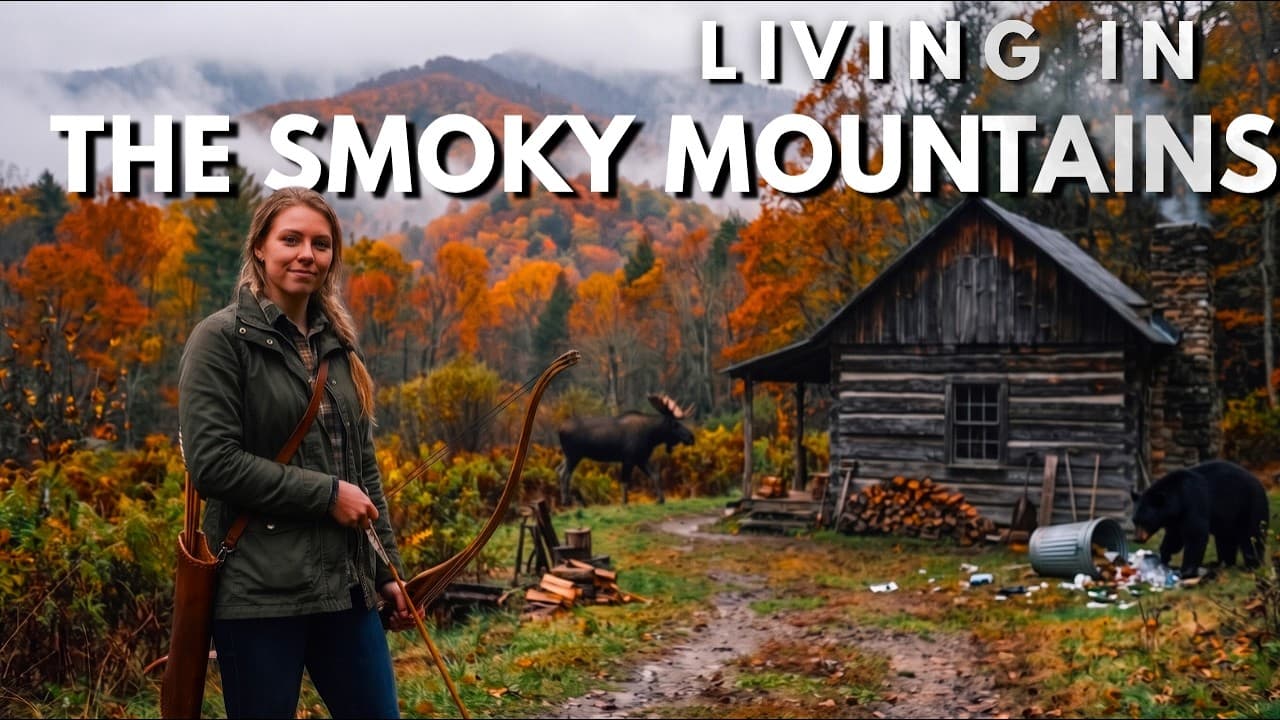
The Smoky Mountains hold a strange distinction. Great Smoky Mountains National Park is the most visited national park in America, drawing roughly 12 to 13 million visits a year, more than the Grand Canyon and Yosemite combined, and it charges no entrance fee to any of them. Yet drive ten minutes past the pancake houses of Gatlinburg and you find communities that were in these hollows long before the park.
This guide takes the Happy Living film on life in the Smokies and fills in what a traveler needs to know: who the Cherokee are and why they are still here, what Appalachian culture looks like beyond the moonshine jars, and how to visit without spending your holiday in traffic on the Parkway.
Watch the Film First
The film moves between the two faces of the Smokies. On one side are the neon strips of Gatlinburg and Pigeon Forge, where Dollywood, dinner theatres and moonshine tastings absorb millions of visitors a year. On the other are the quiet places: the Qualla Boundary in Cherokee, North Carolina, the workshops of the Great Smoky Arts and Crafts Community, the empty cabins of Cades Cove, and the ridgelines where the blue haze rises on a still morning. Running through it all is what it means to call the busiest park on Earth your backyard.
The Smoke, the Cherokee and the Families Who Were Here First
Start with the name. The "smoke" is not smoke at all. The dense forest releases natural compounds that scatter blue light and settle into the valleys as haze, especially after rain. The Cherokee called this place Shaconage, usually translated as the place of blue smoke, and they lived across these mountains for well over a thousand years before European settlers arrived. The park's highest peak, long known as Clingmans Dome, was officially renamed Kuwohi in 2024 at the request of the Eastern Band of Cherokee Indians, restoring a name that predates the Confederate general whose name replaced it. At about 6,643 feet it is the highest point in Tennessee, and the tower on top is one of the easiest big views in the park.
The Cherokee story is the one most visitors skip. In 1838 the United States forced most of the Cherokee Nation west on the Trail of Tears. A few hundred stayed behind, some hiding in the high country, others holding land through William Holland Thomas, a white trader adopted by the Cherokee who could legally buy property for them. Their descendants became the Eastern Band of Cherokee Indians, a federally recognized tribe of roughly 14,000 to 16,000 enrolled members whose home, the Qualla Boundary, borders the park's North Carolina entrance. The Museum of the Cherokee People, renamed in 2023, tells the whole arc from prehistory to the present, and the Oconaluftee Indian Village and the outdoor drama Unto These Hills show the living culture rather than a museum case. Just inside the park, reintroduced elk graze the meadow at the Oconaluftee Visitor Center most evenings.
Then there are the mountain families. When the park was established in 1934, there were no empty federal lands to carve it from. Tennessee and North Carolina bought out thousands of small farms and timber tracts, helped by a five million dollar Rockefeller gift, and more than a thousand families were moved off land their grandparents had cleared. Cades Cove, the broad valley on the Tennessee side, is where this history is easiest to touch. Settlers such as John Oliver arrived in 1818, and by the time the park came the cove had churches, a gristmill, a school and several hundred residents; some were given lifetime leases and stayed into the 1940s. Today the 11-mile loop road passes their log homes, the Primitive Baptist church and the Cable Mill, and on a summer evening with deer in the fields it is both beautiful and faintly haunting. Our guide to Gettysburg explores another American landscape where the past refuses to stay buried.
Moonshine, Music and the Eight-Mile Loop of Makers
Appalachian culture is often sold as a cartoon, and Gatlinburg does its share of the selling. Moonshine is the obvious example. Illegal corn whiskey was a real economic lifeline in these hollows for generations, especially during Prohibition and the Depression. Since Tennessee loosened its distilling laws in 2009, legal moonshine has become a tourist industry; Ole Smoky opened in Gatlinburg in 2010 and its tasting bars are fun, and also a long way from the roots.
For the real thing, drive the Great Smoky Arts and Crafts Community, an eight-mile loop along Glades Road and Buckhorn Road on the edge of Gatlinburg. Founded in 1937, it is home to roughly a hundred working artisans, many in family workshops that go back generations: woodcarvers, broom makers, potters, quilters and blacksmiths. You can watch a bowl being turned or a quilt being pieced and buy it from the person who made it, which is as close as a traveler gets to the self-reliant craft tradition that kept mountain households going long before tourism did.
Music is the other thread. Ballads from Scotland, Ireland and England met the African banjo and the fiddle in these mountains and became old-time music, which in turn fed bluegrass. Dolly Parton, born in 1946 in a small cabin in Sevier County, is the most famous person these hills have produced, and Dollywood in Pigeon Forge is as much a tribute to that heritage as a theme park; look past the roller coasters and you find craftspeople, a gristmill and bluegrass stages. Her statue stands outside the courthouse in Sevierville.
Why Locals Love Living Beside the Busiest Park on Earth
The film's central question is why anyone would choose to live next door to 12 million visitors. The park is free, so locals treat it as an extension of their own land, walking a trail before work or driving up to Newfound Gap to watch a storm roll through. The region has four distinct seasons, from spring wildflowers to the synchronous fireflies of early June, when Photinus carolinus beetles at Elkmont flash in unison for about two weeks and the park runs a lottery just to park a car. Roughly 1,900 black bears live in the park, about two per square mile, and locals talk about them the way people elsewhere talk about weather. Autumn, when colour peaks high up in early to mid October and reaches the valleys by early November, is the season residents live for, and it rivals anything we have filmed in Kyoto.
The trade-offs are real. Gatlinburg has roughly 4,000 permanent residents and Pigeon Forge about 6,000, yet the Parkway through both towns can take an hour to drive in October, and housing has been squeezed by short-term rentals. In November 2016 the Chimney Tops 2 wildfire, driven out of the park by hurricane-force winds, killed 14 people and damaged or destroyed roughly 2,500 buildings in and around Gatlinburg. The town rebuilt quickly, but residents still measure time as before and after the fire. Life here is a bargain struck with the mountains and the crowds, and most who stay feel they got the better end of it.
What It's Really Like to Visit
The Smokies are easy to reach, free to enter and genuinely crowded. Plan around the crowds.
- Best time to go: Mid to late October for colour, but book months ahead. Late April to May for wildflowers and full waterfalls. Early June for the synchronous fireflies, which need a lottery entry in spring. Winter is quiet and often lovely, but the road to Kuwohi closes from December to March and Newfound Gap Road can shut for snow.
- Getting there: Fly into Knoxville (McGhee Tyson) for the Tennessee side, roughly an hour from Gatlinburg, or Asheville for the North Carolina side, about an hour from Cherokee. There is no public transport into the park, so you will need a car.
- Where to base: Gatlinburg for walking access to the park entrance. Pigeon Forge for Dollywood and families. Townsend, the self-described peaceful side of the Smokies, for Cades Cove and quiet. Bryson City or Cherokee for the North Carolina side, with the Great Smoky Mountains Railroad, Deep Creek and far fewer people.
- Parking tag and costs: There is no entrance fee, a condition written into the deed when Tennessee handed over the main road in 1951. Since 2023 any vehicle parked for more than 15 minutes needs a Park It Forward tag: about 5 dollars a day, 15 a week or 40 a year. Backcountry camping requires a permit and a small nightly fee.
- Trails for every level: Laurel Falls (2.6 miles round trip, paved) and the Kuwohi tower (1 mile, steep but paved) suit most people. Abrams Falls (5 miles) and Andrews Bald (3.5 miles) are moderate. Alum Cave to Mount LeConte (about 11 miles) and Charlies Bunion on the Appalachian Trail (8 miles from Newfound Gap) are the classic hard days.
- Bear safety: Stay at least 50 yards from any bear; approaching or feeding one is a federal offence. Store food in your vehicle or the bear lockers at campsites, never in a tent. If one approaches, make yourself large and loud and back away slowly; never run.
- Beating the traffic: Enter the park at dawn, especially for Cades Cove, where the loop opens at sunrise and is closed to cars on Wednesdays from May to September. Use the Gatlinburg Bypass to skip the Parkway, and reach Townsend via Wears Valley Road rather than through town.
- Weather: Kuwohi can be 10 to 20 degrees Fahrenheit cooler than Gatlinburg and gets roughly 85 inches of rain a year. Summer afternoon thunderstorms are routine, so carry a rain layer and a warm layer on every hike.
For another outdoor culture built on free access to wild country, see our Norway travel guide.
What to Pack for the Smokies
The Smokies are a temperate rainforest with a theme park at the gate, so pack for mud, rain and sudden cold.
Affiliate picks, not a shopping checklist. Use what you own first. Check the listing's model, size, seller and current availability before purchasing.
Hiking Trails of the Smokies Guide
The trail bible published by the Great Smoky Mountains Association, with distances, difficulty and history for every official path in the park.

Merrell Moab 2 Waterproof Hiking Boots
The Smokies are muddy and beautiful, waterproof boots for every trail. Break them in before the trip and your feet will thank you on Alum Cave.

Columbia Watertight II Rain Jacket
Mountain weather changes fast, a packable rain jacket is non-negotiable. Light enough to live in the bottom of your daypack all week.

Osprey Farpoint 40
Perfect daypack for Smokies trails. Carries water, layers and a bear-safe lunch without feeling bulky at the overlooks.
FAQ
Is Great Smoky Mountains National Park really free?
Yes, there is no entrance fee, which is one reason it is the most visited national park in America. Since March 2023, though, every vehicle parked inside the park for more than 15 minutes needs a Park It Forward parking tag, sold daily, weekly or annually. Driving through on Newfound Gap Road without stopping costs nothing.
Which side is better, Tennessee or North Carolina?
They are different trips. The Tennessee side has Gatlinburg, Pigeon Forge, Cades Cove and most of the famous trailheads, along with most of the crowds. The North Carolina side has Cherokee, Bryson City, the Oconaluftee elk fields and quieter roads. Newfound Gap Road links the two in about an hour, so one visit can do both.
When is peak autumn colour in the Smoky Mountains?
High elevations usually turn in early to mid October, the mid elevations around Newfound Gap in mid to late October, and the lower valleys and Cades Cove in late October into early November. Because the park spans more than a mile of elevation, there is good colour somewhere for roughly a month.
Will I see a black bear?
Probably, if you spend a few days here. Cades Cove at dawn or dusk is the most reliable spot, and bears wander into Gatlinburg itself. Keep your distance and keep food locked away; a bear that learns to raid cars is usually a bear that has to be killed.
Watch More from Happy Living
The Smokies are one stop on a longer journey through how people actually live in the places the world thinks it knows. Browse the full Happy Living film collection for Switzerland, Norway and Gettysburg, or subscribe on YouTube to catch each new film the week it is released. The journal has a companion guide for every destination.